



The story of artificial intelligence (AI) is reminiscent of the automobile’s rise in the early 20th century. The introduction of cars transformed society, but with that transformation came chaos: unregulated roads, frequent accidents, and growing public alarm. It wasn’t until regulation caught up that we could realize the full potential of this innovation while minimizing harm. Similarly, the rapid advancement of AI demands a regulatory response—but this time, we need to act faster and smarter.
The history of driving laws offers critical lessons for governing AI. And just as philanthropy and the nonprofit sector have long driven progress in equity and justice, they now have a unique opportunity to lead the charge in creating an ethical framework for AI governance.
The Wild West Era of Innovation
In the early 1900s, automobiles represented freedom and progress—but also chaos. With no traffic lights, speed limits, or licensing requirements, roads were dangerous, and innovation was unchecked. Sound familiar?
The AI landscape today is a digital Wild West. Companies are racing to innovate, often without considering the societal risks. Algorithms are deployed with little oversight, leading to biased hiring decisions, privacy violations, and even threats to democracy through misinformation campaigns. The AI Shadow Regulation Report highlights how these harms disproportionately affect marginalized communities, exacerbating inequities that philanthropy and nonprofits have spent decades trying to address.
In the same way that traffic regulation brought order to roads, we need a structured, values-driven approach to AI governance—one that centers safety, equity, and accountability.

Catalysts for Regulation: Learning from History
The proliferation of automobiles led to increasingly severe accidents, prompting public outcry and eventually, government action. Connecticut passed the first statewide traffic laws in 1901, setting modest speed limits of 12 mph in cities and 15 mph on rural roads. By the 1930s, standardization became key, with the widespread adoption of the now-familiar three-way traffic light. These incremental steps built the foundation for safer roads.
AI has already reached its tipping point. We’ve seen biased algorithms deepen systemic racism in policing and hiring. We’ve watched deepfakes and generative AI sow distrust in public discourse. We’re witnessing automation displace workers. Each of these incidents is a signal, much like those early traffic fatalities, that regulation is not just necessary—it’s overdue.
Philanthropy has the agility and foresight to develop, advocate for and adopt the initial frameworks that will grow into broader systems of oversight. Nonprofits, grounded in values of justice and equity, can ensure these frameworks don’t just benefit those who build AI—but also those most affected by it.
Standardization: The Foundation for Safety
The evolution of traffic laws underscores the power of standardization. By 1960, innovations like mandatory seat belts and vehicle inspections had drastically reduced fatalities. These measures weren’t just technical—they were cultural shifts, embedding safety into how we interact with cars.
For AI, standardization can take many forms:
Ethical Design: Embedding principles of fairness and inclusivity into every algorithm.
Transparency Mechanisms: Creating explainable systems so that decisions—like why someone was denied a loan—are understandable and accountable.
Data Privacy and Security: Establishing protocols to protect personal information, especially for vulnerable populations.
Certification Processes: Testing and certifying AI systems to ensure they meet safety and equity standards.
Philanthropy can be the engine driving these standards. Funding pilot projects, convening diverse stakeholders, and amplifying marginalized voices can help ensure that AI governance reflects the values of society, not just the ambitions of Silicon Valley.

Holding the Ethical Compass
Nonprofits and philanthropy are uniquely positioned to lead in this space. Unlike corporations, which often prioritize profit, nonprofits operate with a mandate to serve the public good. They can act as neutral conveners, bringing technologists, policymakers, and communities to the table to craft governance models that work for everyone.
The AI Shadow Regulation Report makes a compelling case for the role of civil society in shaping AI governance. Nonprofits can:
Advocate for community-centered AI policies.
Fund critical research into AI safety and ethics.
Ensure affected communities have a voice in regulatory decisions.
Philanthropy has long been a driver of systemic change, and in this moment, it can anchor AI regulation in equity, ensuring that technological progress benefits all of humanity.
The Urgency of Now
The gradual evolution of traffic laws took decades. AI, however, is advancing at breakneck speed. Without proactive regulation, we risk embedding inequities into the digital systems that will shape our future.
Philanthropy, with its ability to act independently and nimbly, can accelerate this process. It can fund advocacy efforts, pilot innovative regulatory models, and support the creation of ethical guidelines that evolve alongside the technology.
Balancing Innovation and Responsibility
Traffic laws didn’t stifle the automobile industry; they made it safer and more sustainable. AI regulation must strike a similar balance. The goal isn’t to slow innovation but to ensure that it aligns with society’s needs and values.
Philanthropy can take this one step further by demonstrating how AI can be a force for good. Imagine AI systems designed to combat climate change, improve healthcare access, or support under-resourced schools. These aren’t pipe dreams—they’re possibilities, if we prioritize governance that centers equity and justice.
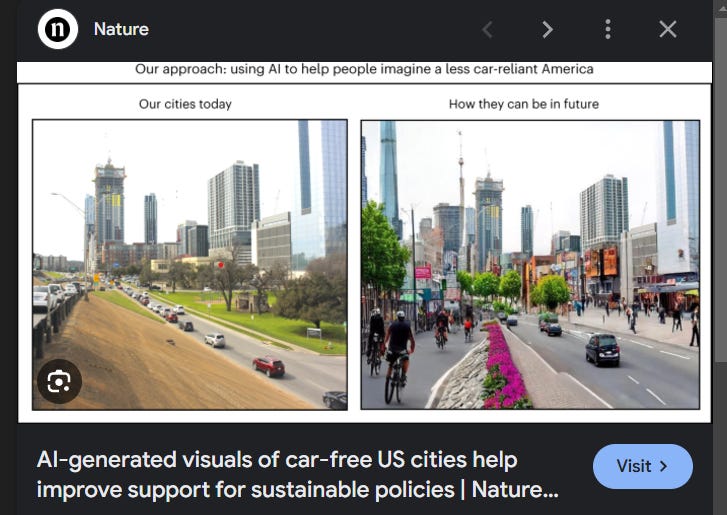
Just as cars shaped cities, AI will shape societies.
A Call to Action
The journey from unregulated chaos to structured safety in the automotive world offers a blueprint for AI. But this time, we need to move faster. AI is the "highway" being built now, and decisions made today about its design and deployment will determine who it benefits—and who it leaves behind.
Philanthropy and the nonprofit sector are uniquely equipped to lead, anchoring AI governance in values that prioritize equity, ethics, and the common good. So write that policy, explore the tool, use it sometimes, use it daily. Ai is here. Ignorance is perilous.
Just as traffic laws democratized the road, AI regulation must democratize technology. The stakes are higher, the timeline shorter, and the opportunities unprecedented. By learning from history and acting boldly, we can navigate the AI revolution with humanity steering the way.
Written in collaboration with Perplexity and ChatGPT.


