


Align. Steward. Enable. The three moves that get you from watching to playing.
It’s August.
Q4 is not a rumor anymore. It’s on the calendar, close enough to see the outline of it — budget season, board meetings, the annual report that has to say something true about where the organization stands.
And there it still is — that annoying unaddressed line item. Same as it’s lingered since January.
AI?
Question mark included.
It survived Q1. It survived Q2. It’s already survived more than half the year. Not because nobody cares — I’ve yet to meet a senior leadership team that doesn’t care. It survives because nobody has agreed on where to start, how to corral it, or to what end.
That’s not indecision. That’s a team standing in the dugout in the seventh inning, still deciding who bats first.
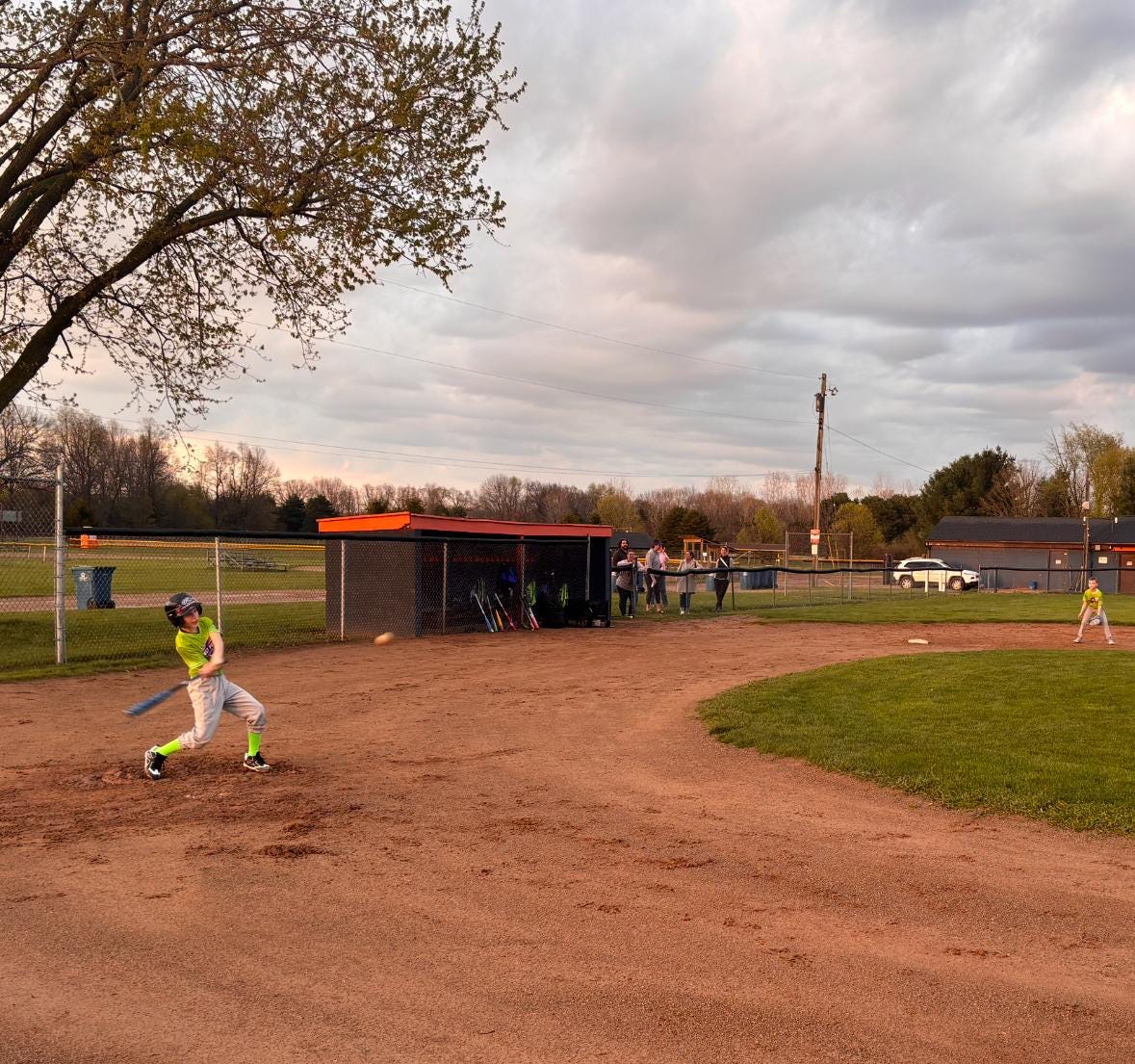
From Stuck, to Ad Hoc, to Strategy
Here’s the arc I watch organizations move through, almost without exception.
Stuck. Nobody’s said no, but nobody’s said go either. The item sits on the agenda, gets pushed to “next quarter,” and next quarter arrives exactly the same.
Ad hoc. Someone breaks the stalemate — usually a staff member, not a strategy. A finance director finds a tool that saves an hour. A grants manager starts using an assistant to draft first passes at report summaries. None of it is malicious. None of it is coordinated. It’s just what happens when people are given a problem, a new tool, and no guidance.
Strategy. This is the destination, not a fourth-quarter miracle. It’s what’s left after an organization has actually done the work — named where it stands, built the guardrails, and equipped the people closest to the work to use the new tool well.
Most of the organizations I met with this summer are existing somewhere between stuck and ad hoc. They’ve watched the ad hoc phase happen for months, quietly, and they know it. The board is starting to ask sharper questions. Staff are further along than leadership realizes. And “AI?” is still sitting on the senior leadership agenda with a question mark instead of an owner.
The organization isn’t behind on AI. The organization is behind on knowing – and governing - what’s already happening.
That gap — between what leadership assumes and what staff are actually doing — is where the real risk lives. Not only in the tool, but in the silence around it’s application – from data usage to disclosure.
Running the Bases
Through the inaugural cohort this past spring, six COOs and senior operating leaders worked through four sessions built around four frames — Mirror, Intern, Bicycle, Bridge — each one a different angle on the same question: what does responsible AI adoption actually require of leadership, not just IT?
What emerged, session after session, wasn’t a checklist. It was a sequence. The same sequence, every time, regardless of culture, budget, or how far along the organization already was.
Align. Steward. Enable.
Think of it as running the bases.
First base is Align. Before any tool gets selected, new vendor onboarded, or pilot commenced, leadership has to agree on what responsible use actually looks like — mission impact goals, risk tolerance, who owns the decision. Skip this base and everything downstream is built on sand. Most organizations try to steal second before they’ve touched first. It doesn’t work in baseball, and it doesn’t work here.
Second base is Steward. This is where guardrails get built — the guidance that protects mission, community trust, and institutional integrity. Workflow cases are clarified, practiced, and pressure-tested here. A Committee advises on edge cases. Policy gets drafted. This is slower work than most leaders want it to be, and it’s the base most often skipped over because it doesn’t feel urgent until the day it very much is.
Third base is Enable. Staff have received the training, vetted the tools, drafted the practice guidelines and are now confident and clear about the organization’s AI approach - which has documented boundaries that are not just assumed. This is the base where innovation becomes safe, because the fence lines are visible.
Home plate is mission impact.
You don’t score by staying on deck. You don’t score by admiring the pitch from the dugout. You score by rounding all three bases, in order, and crossing home — where the actual work of your organization gets easier, faster, and more values-aligned because of what you did on the way there.
Some organizations try to slide into home without ever touching first.
That’s not ambition. That’s a shortcut. And shortcuts in governance don’t save time — they borrow it, at interest, increasing risk with every LLM query.
Diagnosis Is What We Do Well
Here’s what I’ve learned working alongside leaders across philanthropy and the nonprofit sector: almost nobody is stuck because they lack a tool. They’re stuck because nobody has ever named, out loud and specifically, where their organization actually stands.
Is your board asking questions leadership can’t yet answer? Are staff experimenting quietly because no one’s told them not to — or told them how? Is your policy sitting in a drawer, written before anyone had actually used the tools it describes? Does senior leadership have “AI?” on the agenda with no owner, no timeline, and no clear next step attached?
Diagnosis is the unglamorous, essential first act. Before a committee. Before a training. Before a single line of guidance gets drafted, someone has to look clearly at where you actually are — not where the org chart says you should be, and not where the vendor pitch assumes you already are.
That’s the work I do first with every organization I partner with, and it’s the reason the engagements that follow actually hold. You cannot steward what you haven’t named. You cannot enable staff around guardrails that were never actually built.
A Full Team, Not a Solo Act
No one leader is expected to round all three bases alone. That’s not how a team wins.
Once an organization knows where it stands, the work becomes building the right team around home plate — and that team is usually bigger than one department.
For some organizations, that means convening an AI committee — a standing, cross-functional group that makes and documents shared decisions instead of leaving them to whoever asks first. For others, it means an alignment session: getting staff, leadership, board, and even vendors on the same page in a single room, so “responsible AI use” stops being four different definitions held by four different people. AI isn’t a shift you get to sit out. It’s already on the field. The question is whether anyone’s calling the plays.
Moving from stuck to strategic — not willy-nilly.
That’s the whole point. Not everyone experimenting in their own corner, hoping nobody notices. Not a twelve-page policy nobody read. A shared understanding, built together, that lets your organization move into Q4 — and into next year’s plan — with confidence instead of catching its breath every time someone asks what the AI policy actually allows.
The Ecosystem Is Bigger Than One Cohort
The spring AI Governance COO cohort was never meant to be the only door in. It was the first.
This fall, two more doors are opening — both worth walking through:
NTEN’s AI for Foundations Professional Certificate, co-produced with the Technology Association of Grantmakers (TAG), is the most actionable on-ramp available right now. It’s fully self-paced — thirteen one-hour courses plus a final assignment, with up to a year to finish — built for foundations and grantmakers who want to explore ethical, strategic uses of AI in philanthropy before walking into a governance conversation. No cohort deadline to catch. Start this week if you want to. (Learn more)
NTEN also runs a deeper, six-month AI for Foundations cohort — live sessions, including two workshops with me, paired with curated coursework, collaborative learning, and hands-on mentorship toward a real AI-enabled project. This summer’s cohort has already closed to new applicants. We’ll run it again — so if that’s the right depth for your team, this is the moment to get on the list for the next opening rather than wait for the announcement to catch you by surprise.
PEAK Grantmaking’s Practical AI for Grants Management Learning Series takes grants management professionals through the same sequence this piece just walked you through — Values, Practice, Policy — across three working sessions this fall. I’m honored to be the faculty leading it. It’s built for the people closest to the actual workflows: proposal review, reporting, communications, the day-to-day decisions that hold your values or quietly erode them. (Learn more)
Between the cohort, these two programs, and the post-cohort work I do directly with organizations — committee facilitation, alignment sessions, guideline sprints, fractional governance partnership — there is a full bench of ways to get in the game, at whatever position your organization needs filled first.
Take “AI?” Off the Agenda Before the Year Closes
I’ll say the quiet part: the goal was never for AI to stay on the senior leadership agenda forever, trailing that question mark, carried from Q1 to Q2 to Q3 to Q4 like a sticky equipment bag nobody wants to unpack.
Four months remain in 2026. That’s enough time to move from stuck, or from ad hoc, into an actual strategy.
The goal is to answer the question. Clearly enough, and specifically enough, that it graduates off the agenda and into the ordinary infrastructure of how your organization already operates — the way HR policy is infrastructure, the way your financial controls are infrastructure. Not exciting. Not a headline. Just handled.
You don’t win by staying ready. You win by playing.
If “AI?” is still sitting on senior leadership’s agenda as Q4 approaches — no owner, no starting point, no sense of where it’s supposed to lead — the invitation is simple. Let’s diagnose where you actually stand, and build the lineup that gets you around the bases before the year closes.
Align. Steward. Enable.
Let’s get you off the bench.
Ready to talk?
💬 Four months remain in 2026. That’s enough time to get “AI?” off your agenda.
I work with COOs, executive leaders, boards, and grants management teams to turn “stuck and unsure where to start” into a clear, values-aligned game plan. Most engagements begin with a single diagnostic conversation — no pitch, no assumptions, just an honest look at where your organization actually stands.
I take on a limited number of new engagements each quarter. Q4 is filling.
➡️ Let’s talk.
Sources & Further Reading
NTEN + TAG, AI for Foundations Professional Certificate — nten.org
PEAK Grantmaking, Practical AI for Grants Management Learning Series — peakgrantmaking.org
About the Author
Rachel Kimber is managing director of Full Circle Impact Solutions, where she helps foundations and nonprofits build the infrastructure to use AI effectively, ethically, and in service of mission. She works with boards, leadership teams, and grants management staff to align technology adoption with institutional values.
She is faculty for PEAK Grantmaking’s Practical AI for Grants Management Learning Series and NTEN and TAG’s certification programs. Rachel co-created the Stuck to Strategic Framework and speaks internationally on AI, governance, and organizational strategy.