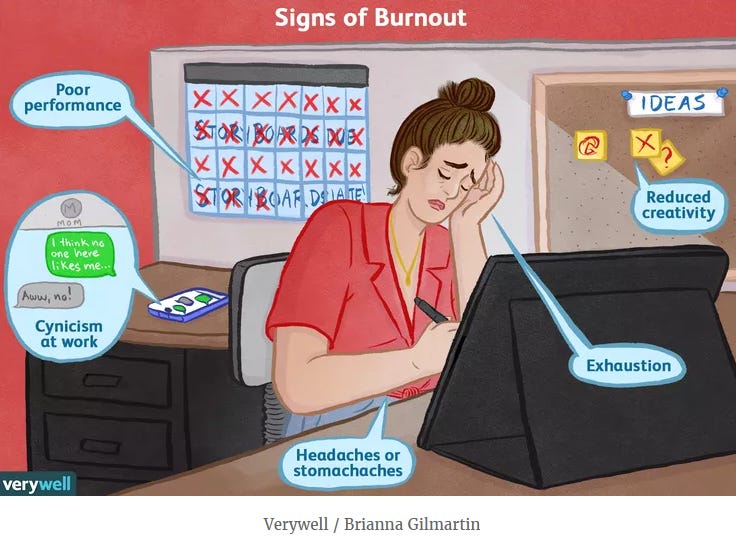
As working mothers, we know what it means to navigate constant demands. Whether juggling deadlines at work, managing household logistics, or seamlessly handing off responsibilities in a 24-hour cycle, we’re no strangers to efficiency. Some might even call us CEOs of our households. This drive to find the shortest, most effective path from A to B shapes how we approach our professional lives, and it’s a mindset that nonprofits can adopt to tackle one of the sector’s most urgent challenges: burnout.
This theme resonated deeply at the Exponent Philanthropy conference in Austin, Texas, where the three of us—Rachel Kimber, Danielle Valle Gilchrist, and Susan Wagoner—attended as first-timers. The conference reinforced what we’ve seen firsthand in our work: burnout is not just an individual problem; it’s a systemic issue threatening the effectiveness of nonprofits and their missions.
Nonprofit Burnout: A Systemic Challenge
Burnout isn’t simply about individuals feeling overwhelmed; it’s a systemic challenge exacerbated by the relentless demands on nonprofit teams. During her keynote, Elisha Smith Arrillaga, Ph.D., from the Center for Effective Philanthropy (CEP), highlighted findings from a recent survey that should serve as a wake-up call: 95% of nonprofit leaders report concerns about burnout, with over a third of foundation leaders worried about staff burnout in the organizations they fund. She framed burnout not just as a workplace issue but as a threat to nonprofits’ missions and their ability to serve communities effectively.
Exponent Philanthropy’s blog post, “Rethinking Capacity-Building Grants: A Call for Change,” complements these insights by pointing out that traditional capacity-building approaches often perpetuate power imbalances, leaving nonprofits struggling to meet funders’ expectations without adequate support. As the article notes, “Capacity-building efforts must shift from focusing on organizational deficits to amplifying the strengths nonprofits already bring to the table.”
Similarly, Grantmakers for Effective Organizations (GEO) emphasizes the need to reimagine capacity-building through a lens of equity and power. In their report, “Reimagining Capacity Building: Navigating Culture, Systems & Power,” GEO argues, “Capacity building should not reinforce the very inequities nonprofits seek to address—it should actively work to dismantle them.” Both perspectives echo Elisha’s call for a systemic reevaluation of how the sector supports its people.
Practical Steps to Combat Burnout
1. Harnessing AI for Efficiency
One of the most promising solutions lies in integrating technology. At Exponent, Rachel Kimber, MPA emphasized the potential of AI as a tool to relieve overburdened staff: "AI isn’t here to replace people—it’s here to give them their time back so they can focus on what matters most." AI tools like ChatGPT can automate time-consuming tasks such as drafting donor communications, managing administrative workflows, or analyzing program metrics. By freeing up staff capacity, AI allows nonprofits to focus on mission-critical work, fostering innovation and reducing the risk of burnout.
2. Leveraging Volunteer Talent
Technology alone isn’t a panacea. Danielle Valle Gilchrist, MBA, underscored the power of skilled volunteer support: "Nonprofits don’t just need funding—they need specialized and diverse human talent to do the work." Platforms like Catchafire connect nonprofits with professionals who can take on key projects, from strategic planning to communications. This not only alleviates pressure on stretched teams but also infuses organizations with fresh perspectives and expertise, driving long-term success.
3. Outsourcing for Strategic Focus
Outsourcing critical functions can be a lifeline for overburdened teams. As Susan Wagoner, CPA explained, outsourcing is about working smarter: "By trusting experts with complex tasks, nonprofits can free up internal resources to focus on their mission." Partnering with specialists for accounting, compliance, or grant reporting ensures operational excellence while lightening the load on nonprofit staff, enabling them to focus on their core mission.
Building a Resilient Sector
The challenges we face as mothers—balancing competing priorities and seeking efficiency—mirror the struggles of nonprofits. Just as we depend on tools, systems, and support in our busy lives, nonprofits must adopt similar strategies to address burnout. As both Exponent and GEO emphasize, capacity-building efforts should prioritize equity, efficiency, and sustainability, ensuring that nonprofits not only survive but thrive.
Elisha Smith Arrillaga’s keynote reinforced that burnout isn’t just a workplace issue; it’s a mission-critical challenge. Nonprofits can’t serve their communities effectively if their staff are overwhelmed. By investing in solutions like AI, skilled volunteers, and outsourcing, the sector can reclaim its capacity and resilience.
Funders and leaders, the time to act is now.
Let’s commit to building a sector that works smarter, not harder—one that sustains its people and delivers on its mission with passion and purpose—not exhaustion.