


My daughter has a softball game Sunday. And she doesn’t really know all the rules yet.
She’s learning to catch. Figuring out whether she wants to bat left or right. Recently, she learned the word ambidextrous.
She’s picking up skills. Watching the other kids. Asking questions. Trying things.
And she’s ready to play.
Not because she understands the whole game.
Because she knows enough to get on the field and start learning from what happens there.
I think organizations need permission to approach AI a little more like that.
You’re out of the dugout. Now what?
In my last post, I wrote about getting out of the dugout.
About moving from “we should probably figure out AI” to actually doing something.
So. You’re out.
Now what?
You don’t need to start with a comprehensive AI policy.
You don’t need an AI committee first.
You don’t need a giant technology audit.
Start by seeing what is already happening.
Because in most organizations I work with, AI use isn’t hypothetical.
People are drafting. Summarizing. Researching. Analyzing. Transcribing. Brainstorming. Preparing for meetings. Working with data.
Some of it is sanctioned.
Some of it is experimental.
Some of it leadership probably doesn’t know about.
Before you decide how to govern AI, it helps to know what you’re actually governing.
Start with an AI Use Snapshot
An AI Use Snapshot is exactly what it sounds like.
A first-pass picture of where AI is showing up in your organization’s work.
Not an audit.
Not a 47-question risk assessment.
Not even a formal AI registry. Yet.
Just enough to see what is happening and start asking better questions.
For each use, I want to know:
What are we doing?
Name the work, not just the tool.
“Using ChatGPT” doesn’t tell me much.
“Using AI to summarize grantee reports” does.
Why are we doing it?
What are we trying to make more efficient, effective, expansive, or equitable?
Who is doing it?
Which team? Who owns the work?
What are we giving it?
Public information? Internal documents? Grantee information? Financial data? Personally identifiable information?
What is it producing?
A draft? A summary? An analysis? A recommendation? Something that might influence a decision?
And then:
What could go wrong?
I look at four risk dimensions:
Operational: Did it work?
Decision: Did it influence judgment?
Data: What did we give it?
Reputational: What happens if people know?
You don’t need a complicated scoring system to start.
Low. Medium. High. Don’t know.
“Don’t know” is useful information.
Sometimes it’s the most useful thing on the page.
What happens when you look at the actual work
I collaborated with a family philanthropy doing this work and we didn’t start by imagining every terrible thing AI might someday do.
We looked at the work staff were already AI-enabling.
AI was already touching grantee materials. Drafting term sheets. Research. Writing. Transcribing.
Once we could see the uses, the conversation changed.
Where was AI genuinely useful?
What information was going into it?
Where did human judgment need to remain firmly in control?
What needed clearer guidance?
What were people already doing responsibly that didn’t need another layer of approval?
And something important became obvious:
Not every use needed the same governance.
A low-risk drafting use might simply need human review.
A workflow involving grantee information might need clearer data boundaries.
A use that could influence a funding decision deserves a different level of attention altogether.
That’s the point.
You can’t govern all of “AI” equally.
You can govern how AI is being used.
You can start tomorrow
If it’s just you, open a spreadsheet.
Give yourself 30 minutes.
List the AI-enabled work you know is happening.
Don’t worry about getting it perfect.
If you’re doing this with a team, have people identify their uses and compare notes.
You may discover that one of the most interesting findings isn’t the AI use itself.
It’s that one person had no idea another person was doing it.
If you’re doing this across an organization, ask departments to identify workflows, not tools.
Then bring those uses together.
Now you have something to work with.
You can see the high-value, lower-risk uses you probably want to enable.
You can see recurring practices that need some shared guidance.
You can see places where AI is influencing judgment and warrants more oversight.
You can see where sensitive data may be moving.
And you can see the “I don’t knows.”
That’s a pretty powerful first step.
Watch the big kids
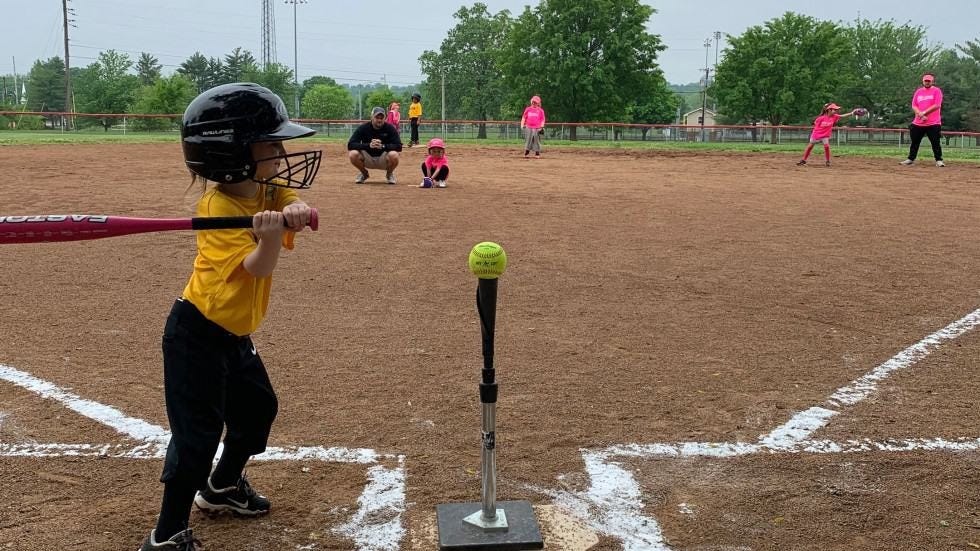
My daughter isn’t learning softball alone.
She’s watching the other kids.
How do they hold the bat?
Where do they stand?
What happens after the ball is hit?
And, of course, she has a big brother.
One of my favorite #SheLeadsAI sayings is that when it comes to AI, the fifth graders are teaching the third graders.
In my house, that is now somewhat literal.
The fifth grader doesn’t know everything either.
He’s just been playing longer.
I love this as a way to think about where we are with AI.
We are all learners.
Some of us have just had more at-bats.
I see this in the cohorts I facilitate - currently the NTEN AI for Foundations cohort.
Different foundations. Different projects. Different levels of AI maturity.
One organization is working through responsible meeting transcription. Another is figuring out how AI fits into grants workflows. Someone else is wrestling with data, policy, staff adoption, or where human judgment needs to stay firmly in the loop.
Then somebody says:
“Here’s what we tried.”
Or:
“Here’s where we got stuck.”
And everybody gets a little smarter.
The fifth graders teach the third graders.
The third graders ask questions the fifth graders haven’t thought about.
And everybody keeps learning.
And watch the pros
Every organization doesn’t need to learn AI from scratch!
Learn from your peers.
Watch the big kids.
And occasionally, go watch the pros.
That’s part of why I’m excited for the #SheLeadsAI conference this October.
I spend a lot of my time teaching and advising organizations about responsible AI. And I still need rooms where I am the learner.
Where I can listen to people thinking deeply about where this technology is going. Compare what I’m seeing with what others are seeing. Challenge my assumptions. Pick up new ideas. Bring them back to my clients and communities.
That’s not a detour from responsible AI practice.
That’s part of it.
Because good governance shouldn’t freeze what we know today into a policy and call the work done.
We should be building organizations that can notice, learn, adjust, and make better decisions over time.
See it. Assess it. Learn from it.
An AI Use Snapshot isn’t an AI governance system.
It won’t answer every question.
But it gives you something much more useful than another theoretical conversation about AI.
It shows you what your people are actually doing.
What’s working.
Where the risks are.
What you don’t know.
And what deserves your attention next.
From there, some uses may need a practice guideline.
Some may need stronger oversight.
Some may tell you something that belongs in organizational policy.
And some may simply be good, responsible uses of AI that you want people to keep doing.
That’s governance beginning to take shape.
My daughter doesn’t need to know everything about softball before Sunday.
She needs some basic rules.
A coach paying attention.
A fifth-grade big brother who can show her a few things.
Teammates she can watch and learn from.
And the chance to get on the field and play.
We don’t need to know everything about AI either.
Start by seeing what is happening. Assess the risk. Watch the big kids. Learn from the pros. Share what you’re learning. Adjust.
Then take another at-bat.
We’re all still learning the game.
Be in touch!
I take on a limited number of new engagements each quarter. Q4 is filling.
➡️ Let’s talk.
About the Author
Rachel Kimber is managing director of Full Circle Impact Solutions, where she helps foundations and nonprofits build the infrastructure to use AI effectively, ethically, and in service of mission. She works with boards, leadership teams, and grants management staff to align technology adoption with institutional values.
She is faculty for PEAK Grantmaking’s Practical AI for Grants Management Learning Series and NTEN and TAG’s certification programs. Rachel co-created the Stuck to Strategic Framework and speaks internationally on AI, governance, and organizational strategy.