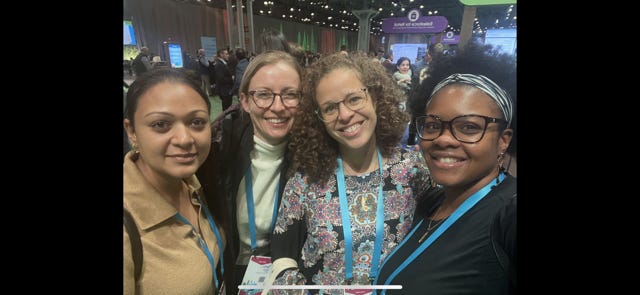


Tools like Zoom, AI, and LinkedIn have irrevocably altered our professional and personal landscapes. They’ve redefined how we connect, collaborate, and even sit through meetings. But these aren’t inherently negative shifts. They are evidence of a broader adaptability—one often pioneered by the most marginalized, like disability rights activists, who have long pushed for accessible norms.
Consider this: Pre-Zoom, standing while presenting was practically mandatory, signaling authority and professionalism. Yet, post-Zoom, I’ve found myself sitting even during in-person engagements, for example teaching at the Good Academy at Civic Hall last, last week. These moments of comfort and accessibility owe much to the advocacy of disabled communities. They normalized sitting, not as a compromise but as a conscious choice—long before it became a pandemic-era norm.
Yet, while we embrace these technological shifts, some experiences remain resolutely analog. Enter fried green tomatoes.
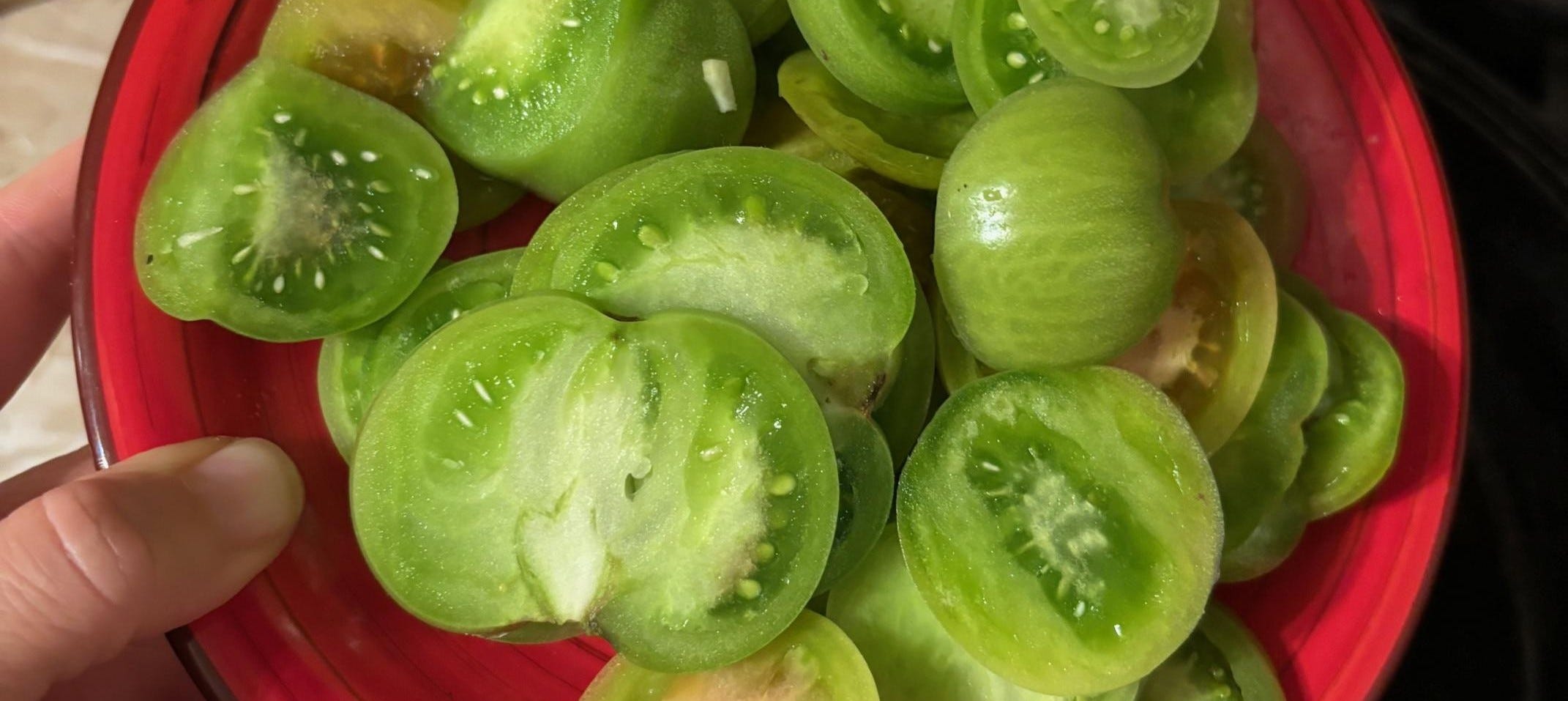
The Fried Green Tomato Paradox
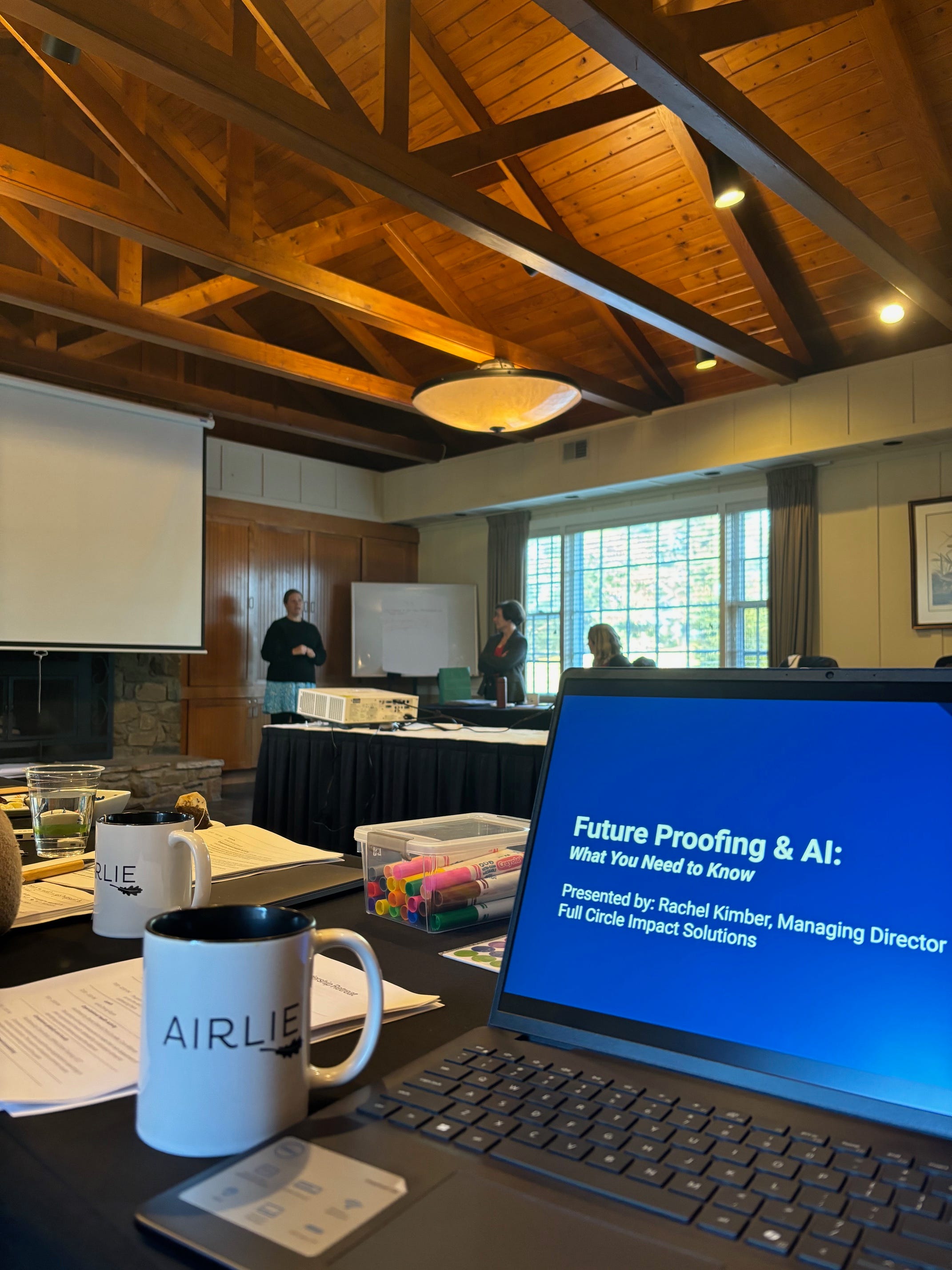
Confession: I’ve never made fried green tomatoes. I only first consumed them on my recent trip to Airlie to meet with a group of Crux Alliance partner COOs to talk AI. When I got home, the mild NY November weather yielded an abundance of unripe fruit in my garden, and the timing felt right to try something new. The act of growing, slicing, and frying these tomatoes is delightfully analog—a process AI can’t replicate. Sure, algorithms can suggest recipes and YouTube chefs can demonstrate ideal frying technique, but the tactile joy of experimentation? That’s beyond any bot’s capabilities.
This grounding experience mirrors a broader truth: as AI accelerates, we’re tasked with preserving the irreplaceably human. Technology shifts our workflows and interactions but doesn’t substitute our need for tangible, real-world engagement
.
AI’s Role: Evolution, Not Replacement
As a cognitive scientist, I can attest that AI mimics only fragments of human cognition. While it excels at pattern recognition and task optimization, it doesn’t create, connect, or feel. The hand-wringing over AI “replacing” us misses the point. AI is a tool, not a competitor. Its utility depends on how we wield it—whether for augmenting nonprofit capacity (as many sessions like those hosted by FCIS and CRE explore) or streamlining grantmaking.
But here’s the rub: AI amplifies both our strengths and our spots for improvement. Poor oversight, poor data inputs risks reinforcing systemic inequities, while thoughtful and precise use can expand access and impact. The challenge is to harness AI with intention and equity (and funding for experimentation :)
Grounding in Humanity
This is why balance matters. While AI facilitates, it doesn’t replace the moments that ground us—whether cooking fried green tomatoes, engaging with community, or presenting to a room of curious minds. As funders, educators, and changemakers, our role is to blend the digital and the analog thoughtfully.
So, let’s reframe the question: not “What will AI do to us?” but “How will we use it to expand what’s possible?”
“It’s funny how a little place like this brought so many people together.”
This line from Fried Green Tomatoes is a tribute to the Whistle Stop Café, where food and conversation weave a tapestry of connection. It speaks to the enduring value of shared spaces and experiences—whether physical or digital—that bring people together. In our increasingly technology-driven lives, these moments of gathering, whether over fried green tomatoes or a Zoom call, remind us of the power of community. The café serves as a metaphor for any space where people meet to share stories, support one another, and find a sense of belonging.
In today’s world, technology often facilitates these gatherings, yet it’s the human touch that truly makes them meaningful. Whether it’s convening at a nonprofit summit, a family table, or even a virtual meeting with colleagues, the essence of connection remains the same. These moments reflect the richness of our shared humanity, grounded in traditions and a sense of togetherness that technology can enhance but never replicate.
A Gathering of Gratitude
This ethos of connection and balance extends to spaces like the Wellness Center, which recently hosted a transformative retreat in October for 6 women. These retreats provided an opportunity for funders, changemakers, and leaders to pause, recharge, and reconnect with their purpose. This Thanksgiving, the center will open its doors again, this time for friends and family to share a meal together. It will be a time to reflect on shared journeys, express gratitude, and build the kind of community that sustains us through both challenges and triumphs.
Whether you’re savoring a plate of fried green tomatoes or carving a turkey, these moments ground us in what truly matters: the relationships and traditions that make us, undeniably, human.
And if you’ve got a great fried green tomato recipe, send it my way—I’ll be in the kitchen experimenting and reflecting on what makes us, undeniably, human.
If you want to hang IRL - you can find me at the Good Academy at Civic Hall next month. And hugs to all the folks who were so generous with their support and time at Salesforce’s Agentforce World Tour this week.